

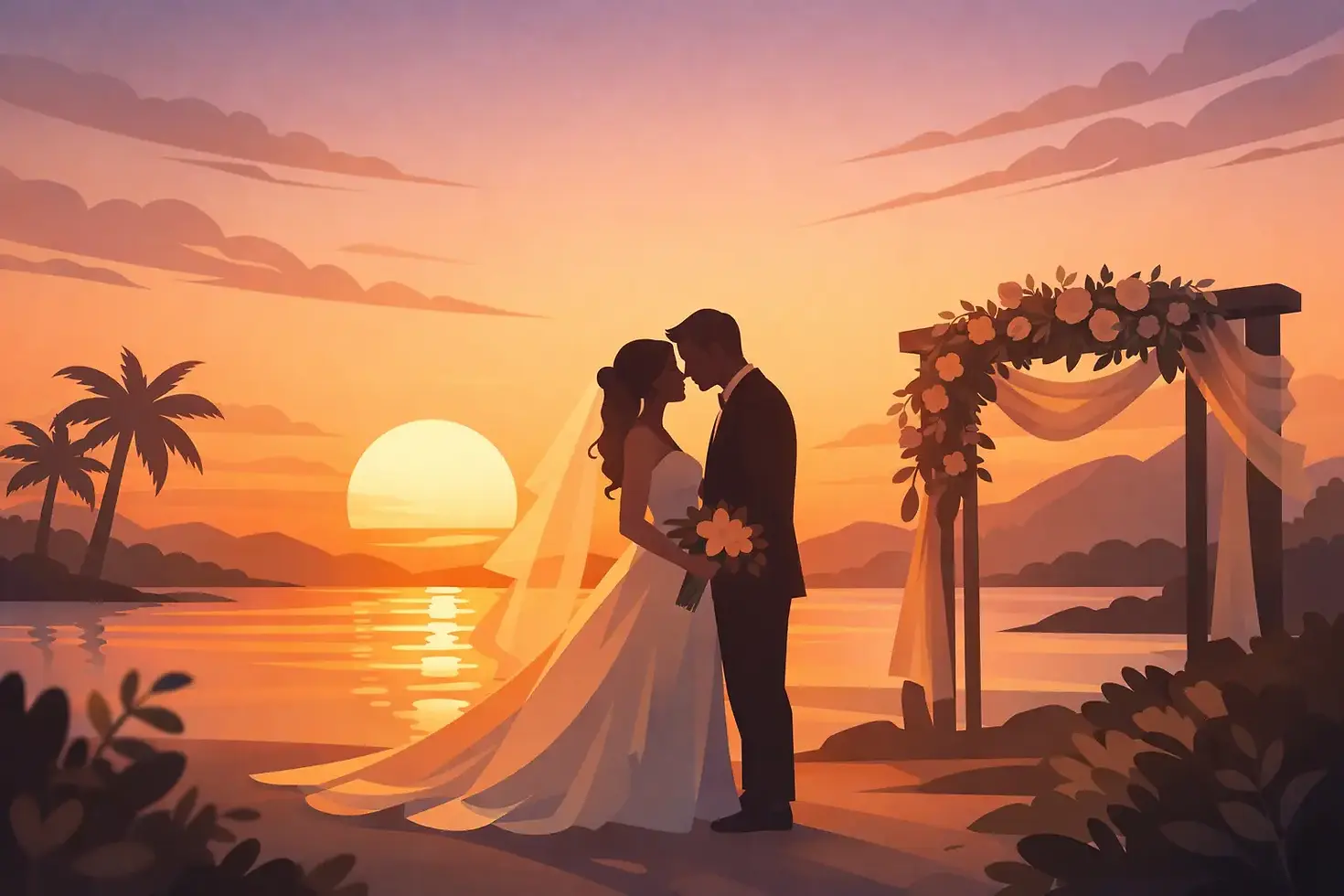
When to Schedule Sunset Wedding Portraits
You can feel it when the timing is right. The light softens, the pace of the day slows for a moment, and suddenly those just-married portraits feel less like another item on the timeline and more like a quiet breath together. If you're wondering when to schedule sunset wedding portraits, the short answer is this: plan them for the 20 to 40 minutes before the sun drops below the horizon, with a little flexibility built in for your venue, season, and scenery.
That answer helps, but wedding days are rarely that simple. In Palm Springs, Joshua Tree, and throughout Southern California, the sunset can be beautiful one minute and harsh the next depending on the location, the mountains, the season, and even the color of the ground around you. The best portrait timing is not just about the clock. It's about the kind of images you want and how you want that part of the day to feel.
When to schedule sunset wedding portraits for the best light
In most cases, the ideal window starts about 30 minutes before official sunset. That is usually when the light becomes softer, more flattering, and easier on the eyes. Skin tones look warmer, shadows are gentler, and the overall feeling becomes more romantic without looking overly staged.
If your ceremony runs close to sunset, it can still work, but it leaves less room to breathe. A delayed processional, a longer family photo list, or travel between locations can shrink that portrait window quickly. That is why many couples benefit from setting aside a specific portrait block during cocktail hour rather than hoping to squeeze it in spontaneously.
In open desert locations like Joshua Tree, that timing may start a little earlier because the sun feels stronger and more exposed. At mountain-adjacent venues, the sun may disappear behind the landscape before the official sunset time listed on your weather app. That means your real portrait light could happen 15 to 25 minutes earlier than expected.
Why official sunset time is only a starting point
Official sunset time is useful, but it is not the whole story. Two venues can be only a short drive apart and have completely different light. A golf course in the Coachella Valley may hold light longer across the open horizon, while a private estate with tall palms, buildings, or mountain views may lose direct sun earlier.
This is where experience matters. A timeline that looks perfect on paper can still create rushed portraits if it doesn't account for the actual way light moves through the space. That is why many photographers build the wedding day timeline around the venue itself, not just the posted sunset time.
Cloud cover changes things too. A thin layer of clouds can create beautifully even light for a longer stretch. A completely clear sky can produce a stronger transition from bright sun to soft glow. Neither is bad. It just changes where the sweet spot lands.
A practical Southern California rule of thumb
If you're getting married in Southern California, start by looking up the official sunset time for your wedding date. Then subtract about 30 minutes. That is often the best place to begin your portrait planning conversation.
From there, adjust based on your venue. If your ceremony site is tucked against mountains or surrounded by structures, you may need to move portraits earlier. If your venue has wide open views and clean horizon lines, you may be able to photograph a little later and enjoy more of that golden glow.
How much time you actually need
For most couples, 15 to 20 minutes is enough for sunset portraits if the location is close and the timeline is running well. That amount of time allows for a gentle walk, a few directed prompts, and natural moments that do not feel forced. You do not need an hour away from your guests to create beautiful images.
If your portrait location requires transportation, uneven terrain, or a longer walk, build in more time. Desert venues are especially worth thinking through carefully. What looks close in photos can take longer to reach in dress shoes, formalwear, or wind.
If you also want a full set of wedding party photos, family formals, and couple portraits all at sunset, that is usually too much to place in one small window. Sunset portraits work best when they are reserved for just the two of you. The rest of the formal photography should happen earlier in the day.
Should you leave your reception for sunset portraits?
Usually, yes. For many couples, stepping out for 10 to 15 minutes during dinner or just after toasts is well worth it. You get the most flattering light of the day, and you also get a private moment together in the middle of a fast-moving celebration.
That said, it depends on your priorities. If you are planning a very short reception, serving courses on a tight schedule, or hoping to be present for every minute, you may prefer to do more portraits before the ceremony and treat sunset as a bonus rather than a must-have.
There is also an emotional trade-off. Some couples love the pause and intimacy of slipping away together. Others would rather stay fully immersed in the party. Neither approach is wrong. The right choice is the one that supports both your experience and your photography goals.
Timing sunset portraits around your ceremony
If your ceremony is scheduled too close to sunset, the day can start to feel compressed. Guests need time to congratulate you, family photos take longer than expected, and suddenly the best light is gone. That does not mean you need to move everything dramatically earlier, but it does mean your ceremony start time should work with the portrait plan.
A good rhythm for many weddings is a ceremony that ends 60 to 90 minutes before sunset. That gives room for family photos, wedding party images, and a short break before the two of you head out for sunset portraits.
For elopements and intimate weddings, you often have more flexibility. If portraits are a top priority, you can build the ceremony itself around the light instead of fitting portraits around a larger event flow. That is one of the reasons smaller celebrations photograph so beautifully in places like Joshua Tree and Palm Springs.
First look or no first look?
A first look can make sunset timing much easier. When most of your couple portraits are done earlier, the sunset session becomes shorter and more relaxed. Instead of trying to create every important portrait in one window, you can simply enjoy the best light and capture a different mood.
If you prefer not to see each other before the ceremony, sunset becomes more important as your main couple portrait time. That is completely workable, but your timeline needs to protect it. In that case, keeping family photo lists organized and portrait locations nearby makes a real difference.
What sunset portraits actually look like
Many couples imagine sunset portraits as bright orange skies and dramatic silhouettes. Sometimes that happens, but often the most beautiful sunset images are quieter than that. They are soft, warm, and intimate. The color may be subtle. The feeling is what stands out.
This is especially true for stylish, candid wedding photography. The goal is not just to place you in pretty light. It is to create space for real interaction - walking, holding hands, laughing, taking a breath, and settling back into each other for a few minutes. When the timing is right, the photographs reflect that ease.
At Takahashi Photography, that part of the day is often where couples finally exhale. The formalities are mostly done, the energy shifts, and the images start to feel even more personal.
Mistakes that can throw off sunset portraits
The biggest mistake is treating sunset as a vague idea instead of a scheduled part of the day. If nobody has protected that time in the timeline, it often gets squeezed out by delays.
Another common issue is choosing a portrait spot that is beautiful at noon but not at sunset. Light direction matters. So does wind, privacy, and how far the location is from the reception.
It also helps to avoid overpacking the hour before sunset. If guests are moving between spaces, if dinner service is beginning, or if key events are stacked too closely together, stepping away can feel stressful rather than easy.
The best way to decide your exact portrait time
The most reliable answer comes from looking at your date, venue, and priorities together. Think about when the sun actually falls at your location, whether you want a first look, how much of cocktail hour you want to attend, and how important sunset images are compared with staying at the reception.
Then build a timeline with intention. Not rigidly, but thoughtfully. The most memorable wedding portraits happen when the schedule supports them without making the day feel overmanaged.
If you are planning a Southern California wedding, especially in the desert, give sunset portraits their own space on the timeline and let the rest of the day flow around that moment. A few well-timed minutes in beautiful light can give you some of the most meaningful images of your entire celebration, and just as importantly, a quiet memory of being together in the middle of it all.


Comments